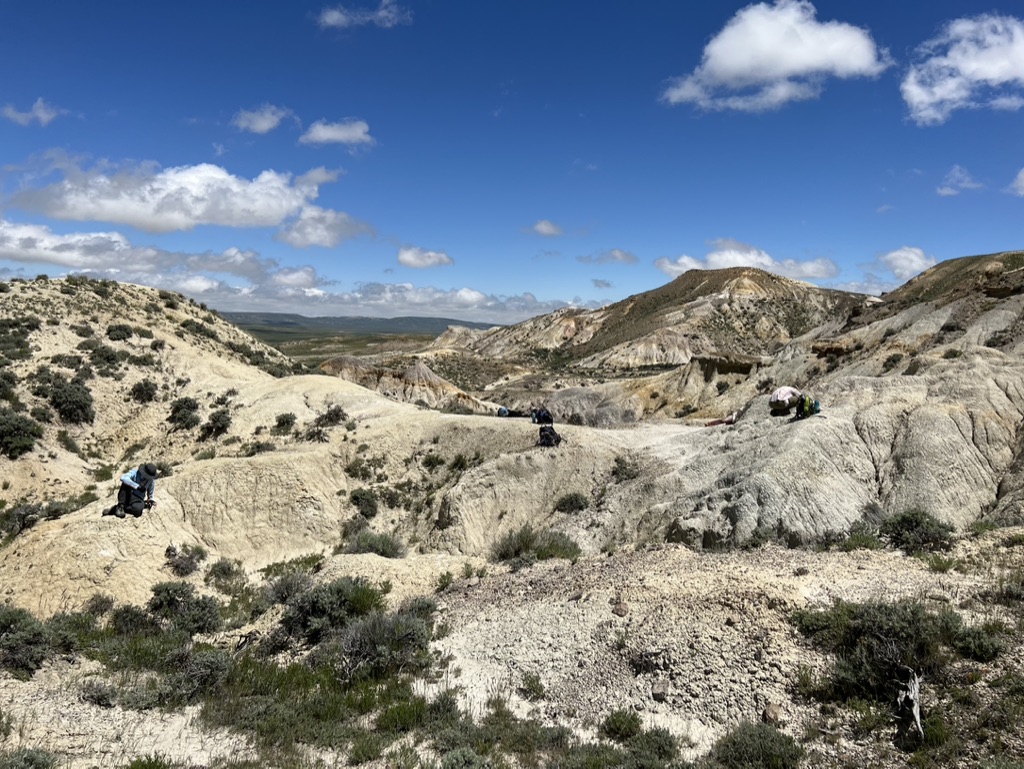
The evolution of North American mammals during the early Cenozoic is best documented in the Bighorn Basin of northern Wyoming, where decades of research and thousands of fossil mammals have created a “gold standard” that serves as a baseline for assessing the fossil record in other parts of the United States. Members of the Beard Lab are exploring spatial and temporal heterogeneity in the fossil record of North America by looking at understudied sites in southern Wyoming and Texas. Anachronistic assemblages of taxa frequently occur in these sites, because of the precocious appearance of certain clades and the delayed extinction of others.
 Beard Lab