Research Topics
Origins and Evolution of Primatomorpha
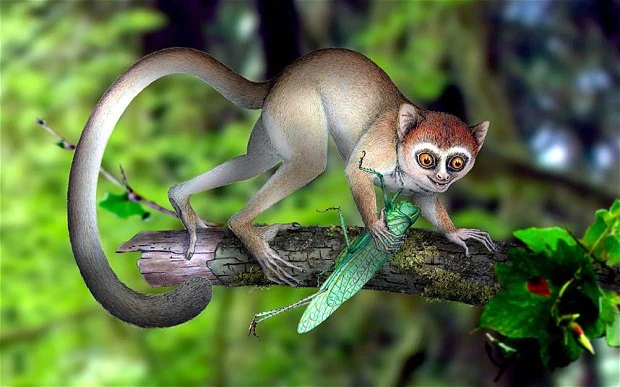
Paleontological insights relevant to macroevolutionary relationships and biogeographic patterns among Primates and their closest relatives (Primatomorpha)
Recent Publications
Rust, K., Ni, X., Tietjen, K., and Beard, K.C. 2023. Phylogeny and paleobiogeography of the enigmatic North American primate Ekgmowechashala illuminated by new fossils from Nebraska (USA) and Guangxi Zhuang Autonomous Region (China). Journal of Human Evolution 185: 103452. doi:10.1016/j.jhevol.2023.103452
Miller, K., Tietjen, K., and Beard, K.C. 2023. Basal Primatomorpha colonized Ellesmere Island (Arctic Canada) during the hyperthermal conditions of the early Eocene climatic optimum. PLoS ONE 18: e0280114. doi:10.1371/journal.pone.0280114
Boyer, D.M., Schaeffer, L.M., and Beard, K.C. 2021. New dentaries of Chiromyoides (Primatomorpha, Plesiadapidae) and a reassessment of the “mammalian woodpecker” ecological niche. Geobios 66-67: 77-102. doi:10.1016/j.geobios.2021.03.002
Mattingly, S.G., Beard, K.C., Salem, M.J., Chaimanee, Y., and Jaeger, J.-J. 2021. A new parapithecine (Primates: Anthropoidea) from the early Oligocene of Libya supports parallel evolution of large body size among parapithecids. Journal of Human Evolution 153: 102957. doi:10.1016/j.jhevol.2021.102957
Beard, K.C., Métais, G., Ocakoğlu, F., and Licht, A. 2021. An omomyid primate from the Pontide microcontinent of north-central Anatolia: Implications for sweepstakes dispersal of terrestrial mammals during the Eocene. Geobios 66-67: 143-152. doi:10.1016/j.geobios.2020.06.008
Beard, K.C., Jones, M.F., Thurber, N.A., and Sanisidro, O. 2020. Systematics and paleobiology of Chiromyoides (Mammalia, Plesiadapidae) from the Upper Paleocene of western North America and western Europe. Journal of Vertebrate Paleontology 39: e1730389. doi:10.1080/02724634.2019.1730389
Mattingly, S.G., Sanisidro, O., and Beard, K.C. 2017. A new species of Carpolestes (Mammalia, Plesiadapoidea) from the late Paleocene of southern Wyoming: assessing changes in size and shape during the evolution of a key anatomical feature. Historical Biology 30: 1031-1042. doi:10.1080/08912963.2017.1328509
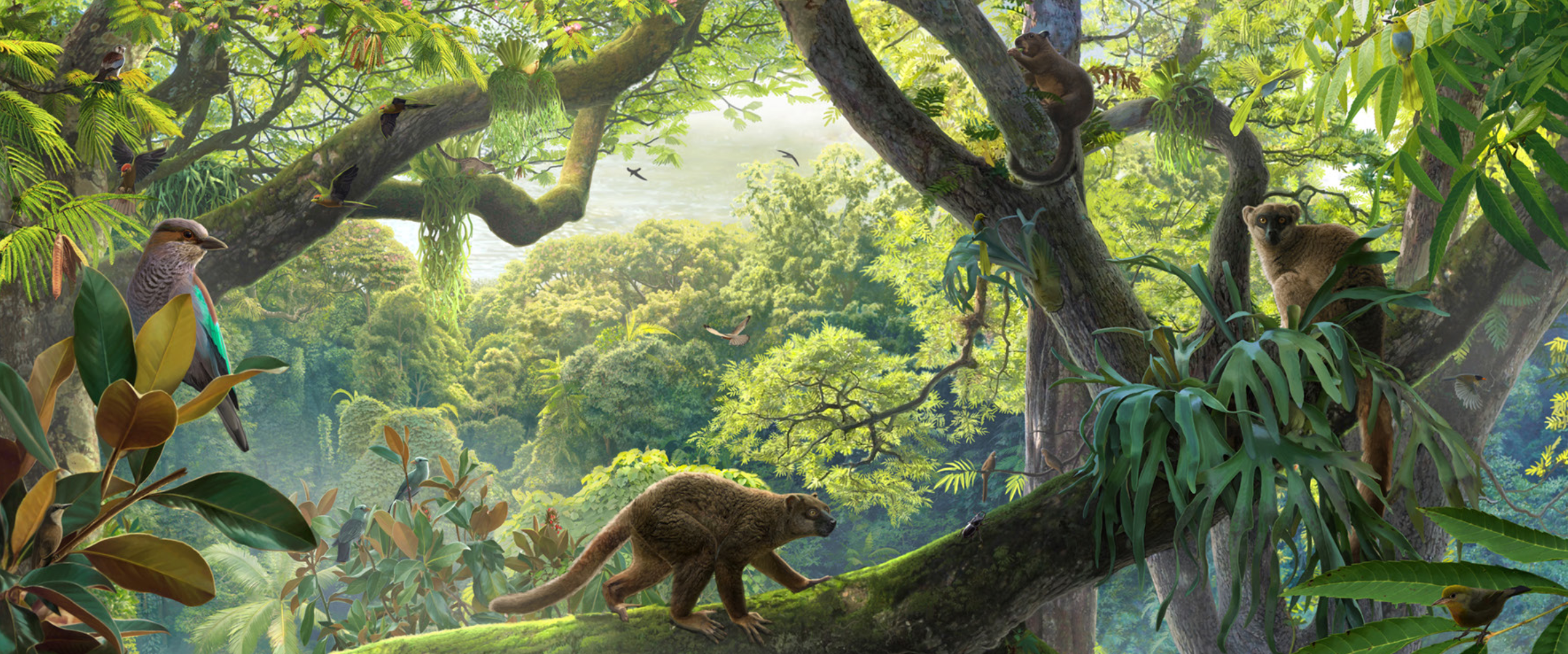
Evolution of an Eocene Island Ecosystem

The “lost continent” of Balkanatolia illuminates island biogeography during “Deep Time”
Recent Publications
Beard, K.C., Coster, P.M.C., Ocakoğlu, F., Licht, A., and Métais, G. 2023. Dental anatomy, phylogenetic relationships and paleoecology of Orhaniyeia nauta (Metatheria, Anatoliadelphyidae), a Gondwanan component of the insular Eocene mammal fauna of Balkanatolia (north-central Turkey). Journal of Mammalian Evolution 30: 859-872. doi:10.1007/s10914-023-09680-6
Métais, G., Coster, P.M.C., Licht, A., Ocakoğlu, F., and Beard, K.C. 2023. Additions to the late Eocene Süngülü mammal fauna in easternmost Anatolia and the Eocene-Oligocene transition at the periphery of Balkanatolia. Comptes Rendus Palevol 22: 711-727. doi:10.5852/cr-palevol2023v22a35
Licht, A., Métais, G., Coster, P., Ibilioğlu, D., Ocakoğlu, F., Westerweel, J., Mueller, M., Campbell, C., Mattingly, S., Wood, M.C., and Beard, K.C. 2022. Balkanatolia: The insular mammalian biogeographic province that partly paved the way to the Grande Coupure. Earth-Science Reviews 226: 103929. doi:10.1016/j.earscirev.2022.103929
Beard, K.C., Métais, G., Ocakoğlu, F., and Licht, A. 2021. An omomyid primate from the Pontide microcontinent of north-central Anatolia: Implications for sweepstakes dispersal of terrestrial mammals during the Eocene. Geobios 66-67: 143-152. doi:10.1016/j.geobios.2020.06.008
Jones, M.F., Coster, P.M.C., Licht, A., Métais, G., Ocakoğlu, F., Taylor, M.H., and Beard, K.C. 2019. A stem bat (Chiroptera: Palaeochiropterygidae) from the late middle Eocene of northern Anatolia: implications for the dispersal and palaeobiology of early bats. Palaeobiodiversity and Palaeoenvironments 99: 261-269. doi:10.1007/s12549-018-0338-z
Métais, G., Coster, P.M., Kappelman, J.R., Licht, A., Ocakoğlu, F., Taylor, M.H., and Beard, K.C. 2018. Eocene metatherians from Anatolia illuminate the assembly of an island fauna during Deep Time. PLoS ONE 13: e0206181. doi:10.1371/journal.pone.0206181
Licht, A., Coster, P., Ocakoğlu, F., Campbell, C., Métais, G., Mulch, A., Taylor, M., Kappelman, J., and Beard, K.C. 2017. Tectono-stratigraphy of the Orhaniye Basin, Turkey: implications for collision chronology and Paleogene biogeography of central Anatolia. Journal of Asian Earth Sciences 143: 45-58. doi:10.1016/j.jseaes.2017.03.033
Paleogene Mammal Dispersal and Biogeography
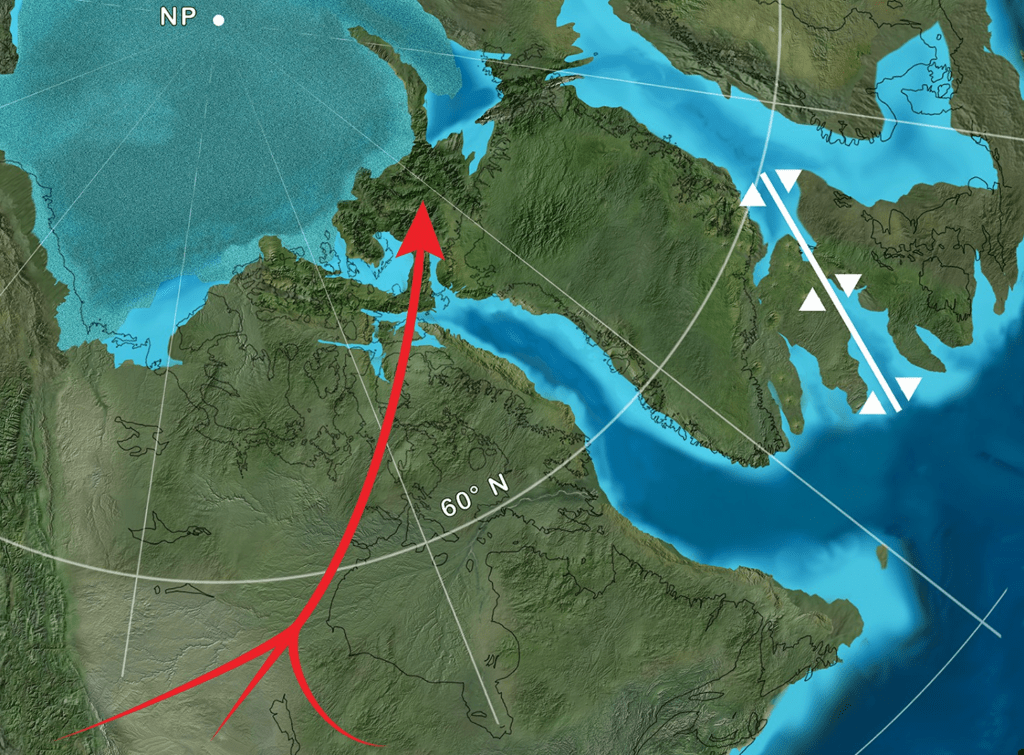
The evolution of Paleogene mammals took place against the dynamic backdrop of climatic and tectonic changes
Recent Publications
Rust, K., Ni, X., Tietjen, K., and Beard, K.C. 2023. Phylogeny and paleobiogeography of the enigmatic North American primate Ekgmowechashala illuminated by new fossils from Nebraska (USA) and Guangxi Zhuang Autonomous Region (China). Journal of Human Evolution 185: 103452. doi:10.1016/j.jhevol.2023.103452
Miller, K., Tietjen, K., and Beard, K.C. 2023. Basal Primatomorpha colonized Ellesmere Island (Arctic Canada) during the hyperthermal conditions of the early Eocene climatic optimum. PLoS ONE 18: e0280114. doi:10.1371/journal.pone.0280114
Jones, M.F., Li, Q., Ni, X., and Beard, K.C. 2021. The earliest Asian bats (Mammalia: Chiroptera) address major gaps in bat evolution. Biology Letters 17: 20210185. doi:10.1098/rsbl.2021.0185
Mattingly, S.G., Beard, K.C., Coster, P.M.C., Salem, M.J., Chaimanee, Y., and Jaeger, J.-J. 2020. A new carnivoraform from the early Oligocene of Libya: Oldest known record of Carnivoramorpha in Africa. Journal of African Earth Sciences 172: 103994. doi:10.1016/j.jafrearsci.2020.1039942016
Beard, K.C. 2016. Out of Asia: anthropoid origins and the colonization of Africa. Annual Review of Anthropology 45: 199-213. doi:10.1146/annurev-anthro-102215-1000192015
Coster, P.M.C., Beard, K.C., Salem, M.J., Chaimanee, Y., Brunet, M., and Jaeger, J.-J. 2015. A new early Oligocene mammal fauna from the Sirt Basin, central Libya: biostratigraphic and paleobiogeographic implications. Journal of African Earth Sciences 104: 43-55.
 Beard Lab