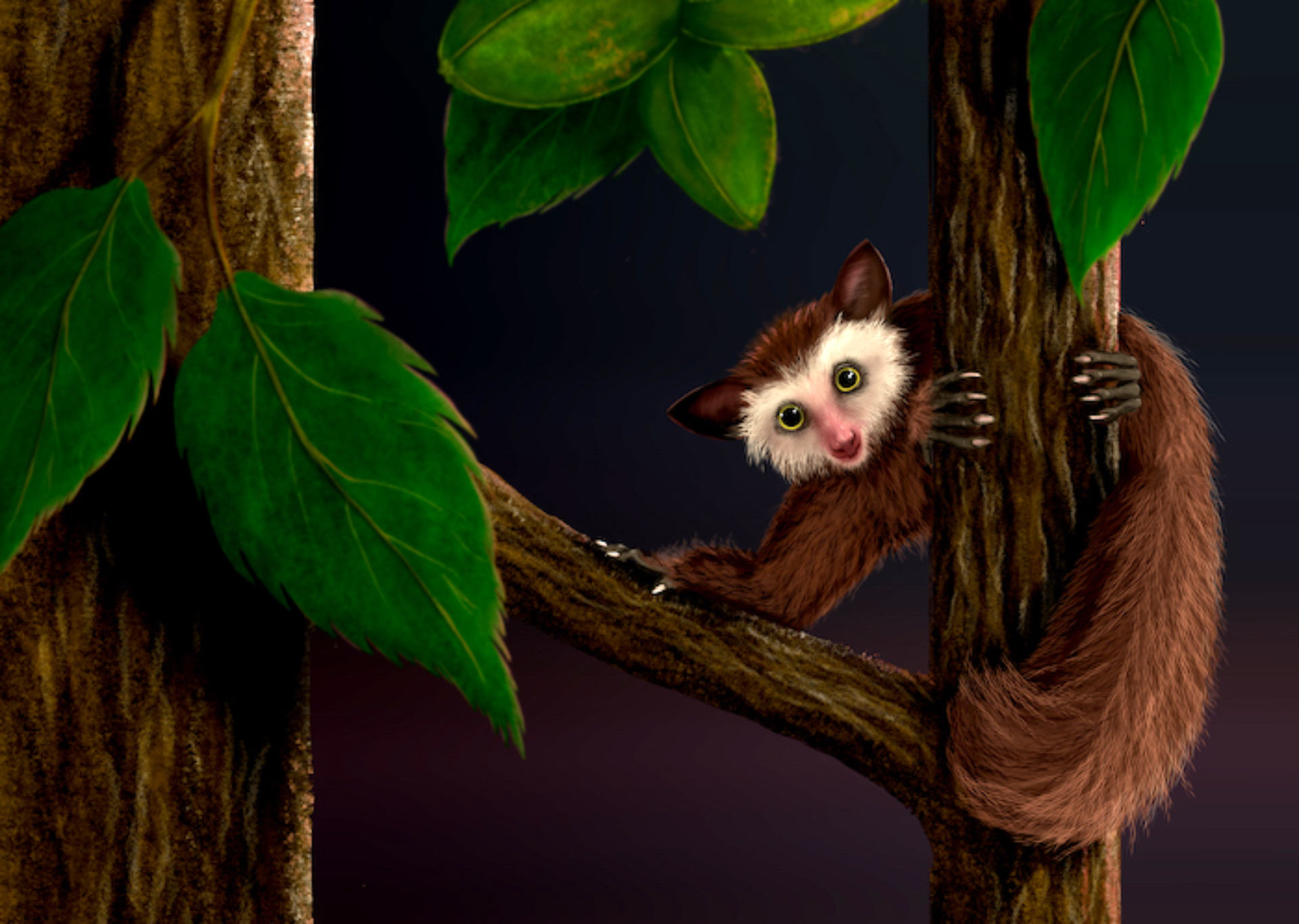
A team of paleontologists, led by the Beard Lab’s PhD student, Kat Rust, published an article in the December 2023 volume of the Journal of Human Evolution describing new material from the enigmatic primate genus, Ekgmowechashala. Meaning “little cat man” in Sioux, Ekgmowechashala was perhaps the last primate to inhabit North America until the arrival of Homo Sapiens. Living during the late early Oligocene (∼ 30 Ma) in what is now the Great Plains, Ekgmowechashala survived millions of years after other North American primates disappeared as global climate cooled at the end of the Eocene. But how did this taxon persist so long after every other species of primate on the continent went extinct?
Sometimes the answers to such questions don’t lie where you might think; or even on the same side of the globe for that matter! It turns out that solving the mystery of Ekgmowechashala required insight from all the around the world in China, where paleontologists found the fossils of Palaeohodites, a primate from the end of the Eocene, a few million years before Ekgmowechashala roamed prehistoric Nebraska. Kat and her colleagues realized that the teeth of Palaeohodites and Ekgmowechashala are remarkably similar and concluded that these two animals are closely related. This indicates that Ekgmowechashala descends from an Asian group of Adapiform primates which managed to survive through global cooling in the low latitudes of Asia. Then, at some point in the early Oligocene when the climate warmed, the ancestors of Ekgmowechashala crossed back into North America, leading to the evolution of North America’s last native primate.
Read the article here: https://www.sciencedirect.com/science/article/pii/S0047248423001318#sec3
 Beard Lab